Fascia, Mobility and Movement for Pilates
What Is This Training?
Fascia, Mobility and Movement is a two-day in-person training for qualified Pilates teachers who want to understand how the body actually changes, and how to facilitate that change in their clients.
Movement science has fundamentally shifted. Research now shows that fascia plays a far greater role in how the body moves, responds, and changes than the traditional muscle model ever accounted for. Fascia contains more sensory nerve endings than muscle tissue, transmits force across the whole body rather than between isolated joints, and responds to stress, hydration, temperature, and nervous system state in ways that directly affect how clients move and feel.
This training reflects that shift. It introduces a systems-based approach to connective tissue, nervous system regulation, and mobility that is immediately applicable to matwork, reformer, and apparatus teaching.
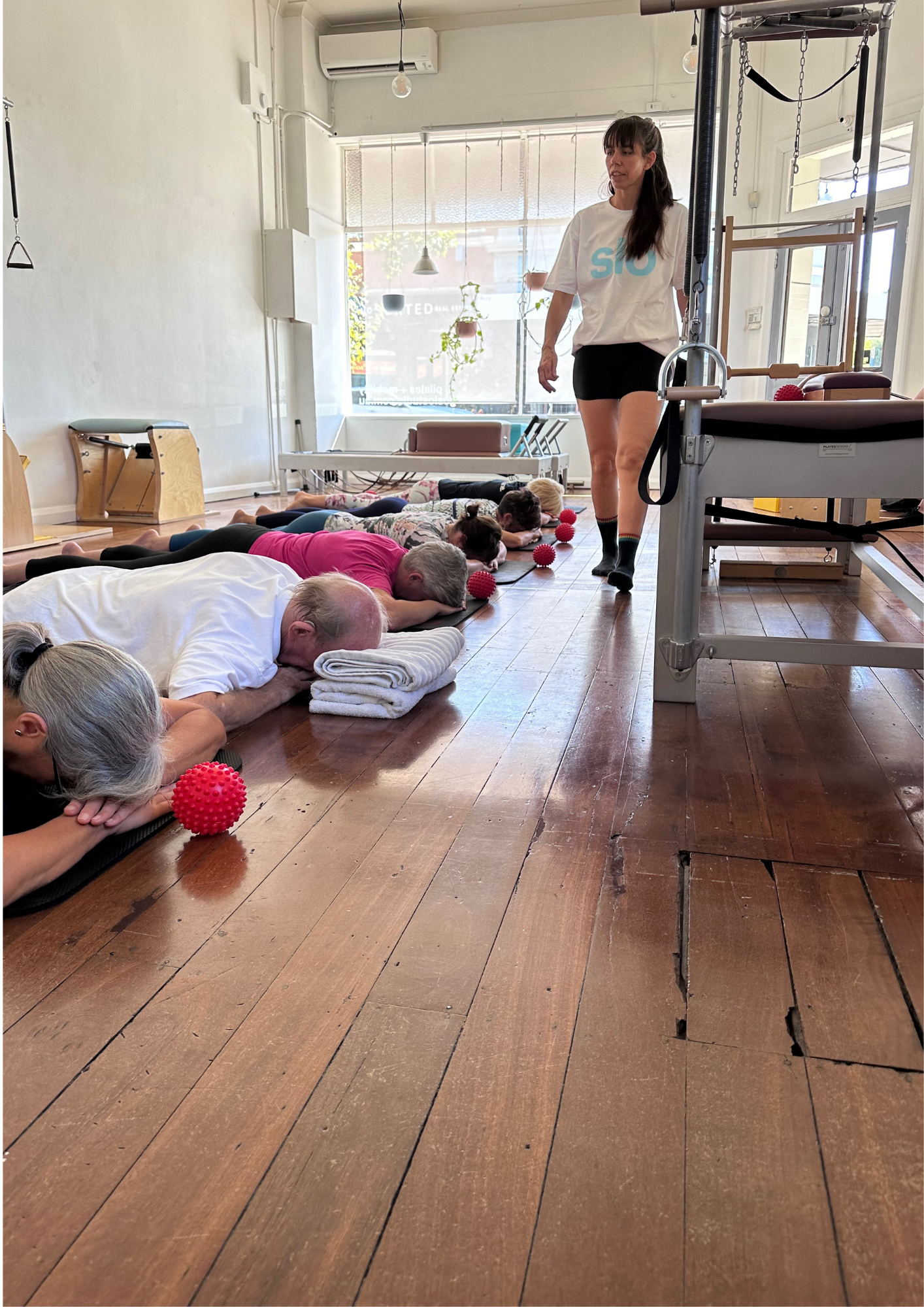
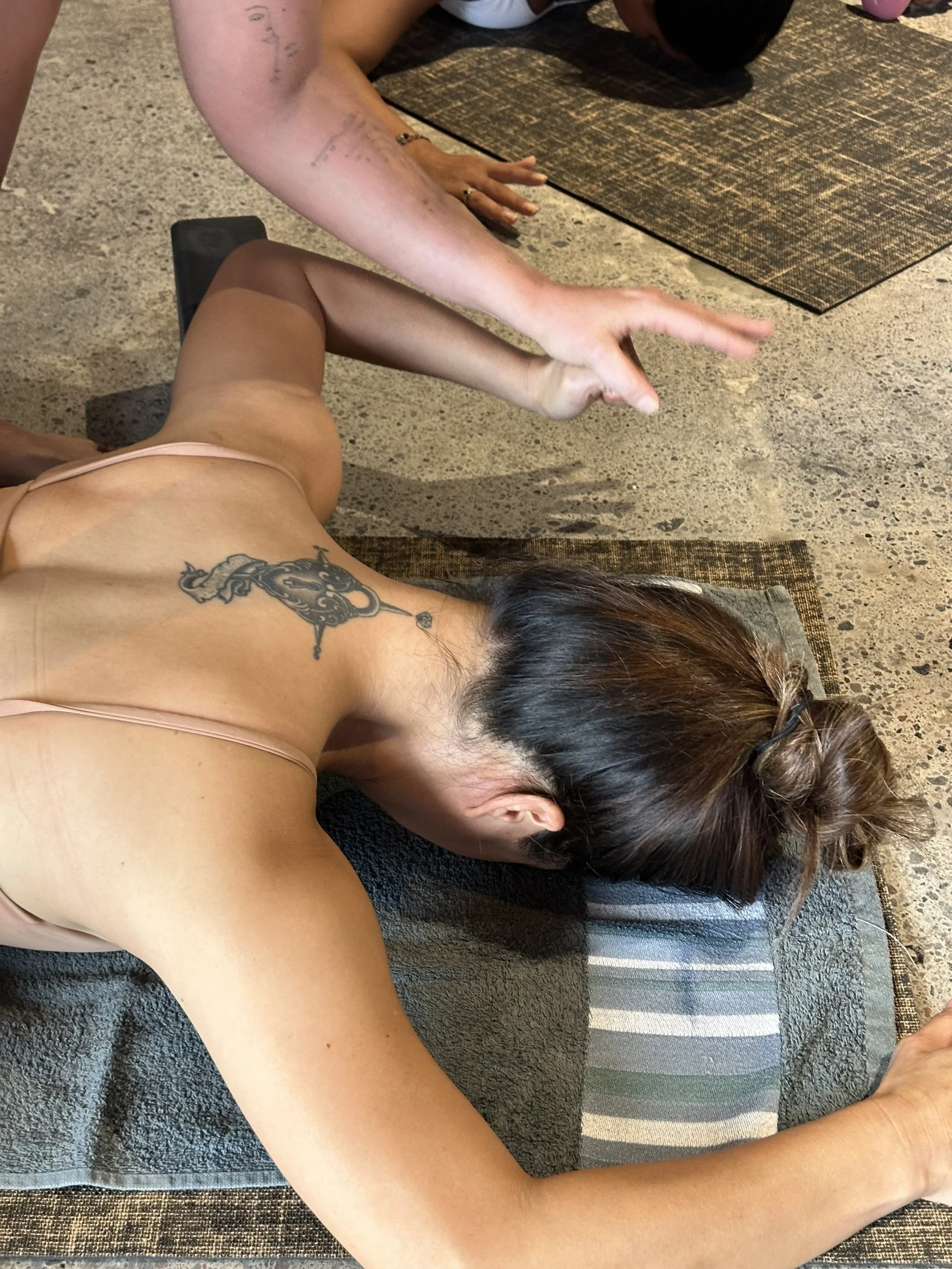
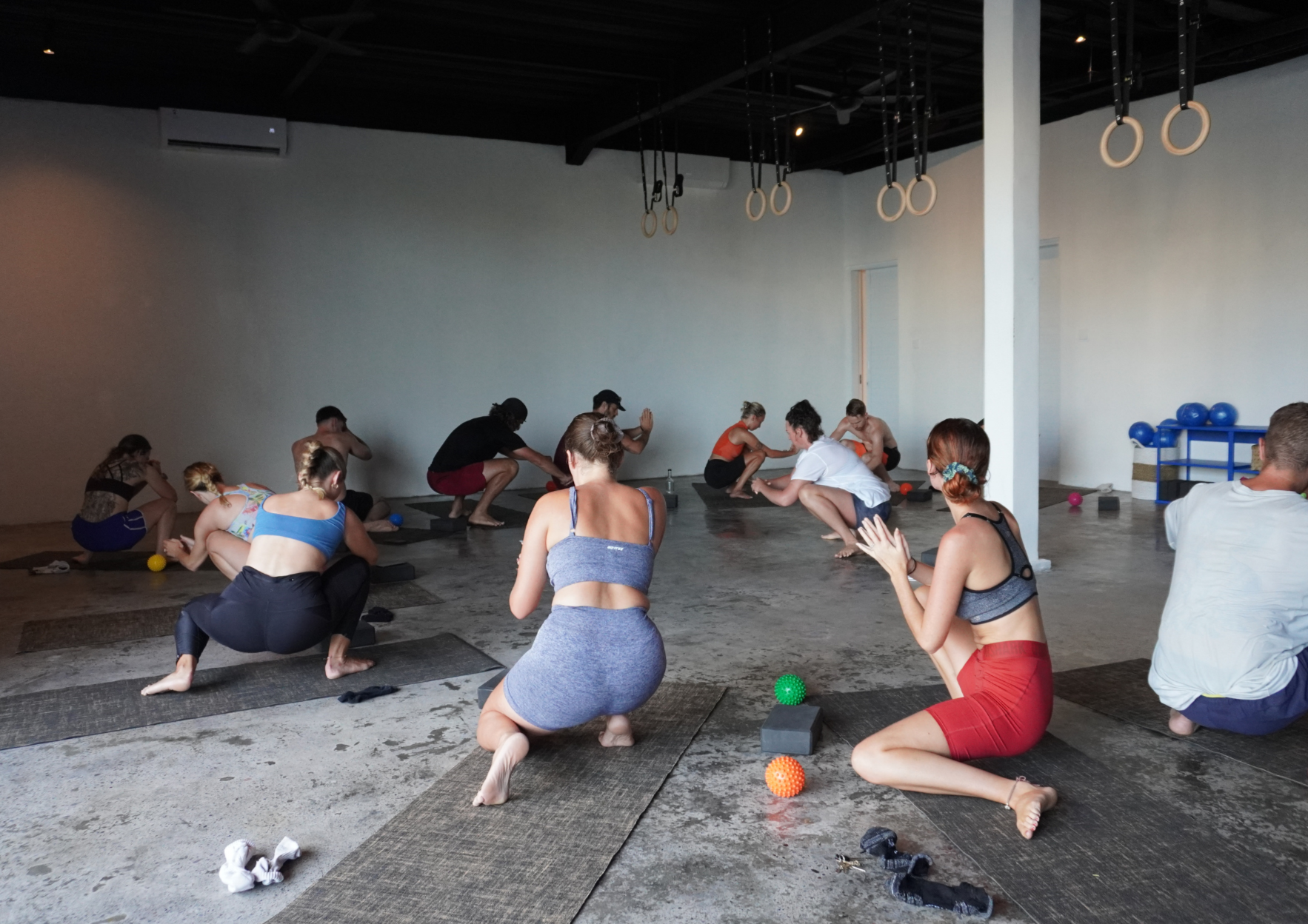
It is heavily practical. Teachers move, feel, and experience the content in their own bodies across both days before applying it as educators
The Two Days
Day One: Understanding and Releasing the System
Day one builds the foundation. Teachers develop a working understanding of how the nervous system and fascia interact, experience the major fascial lines through guided practical work, and move through fascia response and grounding techniques that they can apply in their studios from the following week.
Day one covers:
The autonomic nervous system and its role in movement quality and tissue response
Fascia: what it is, how it behaves, and why the muscle-isolation model falls short
The major fascial lines (Thomas Myers) experienced practically in the body
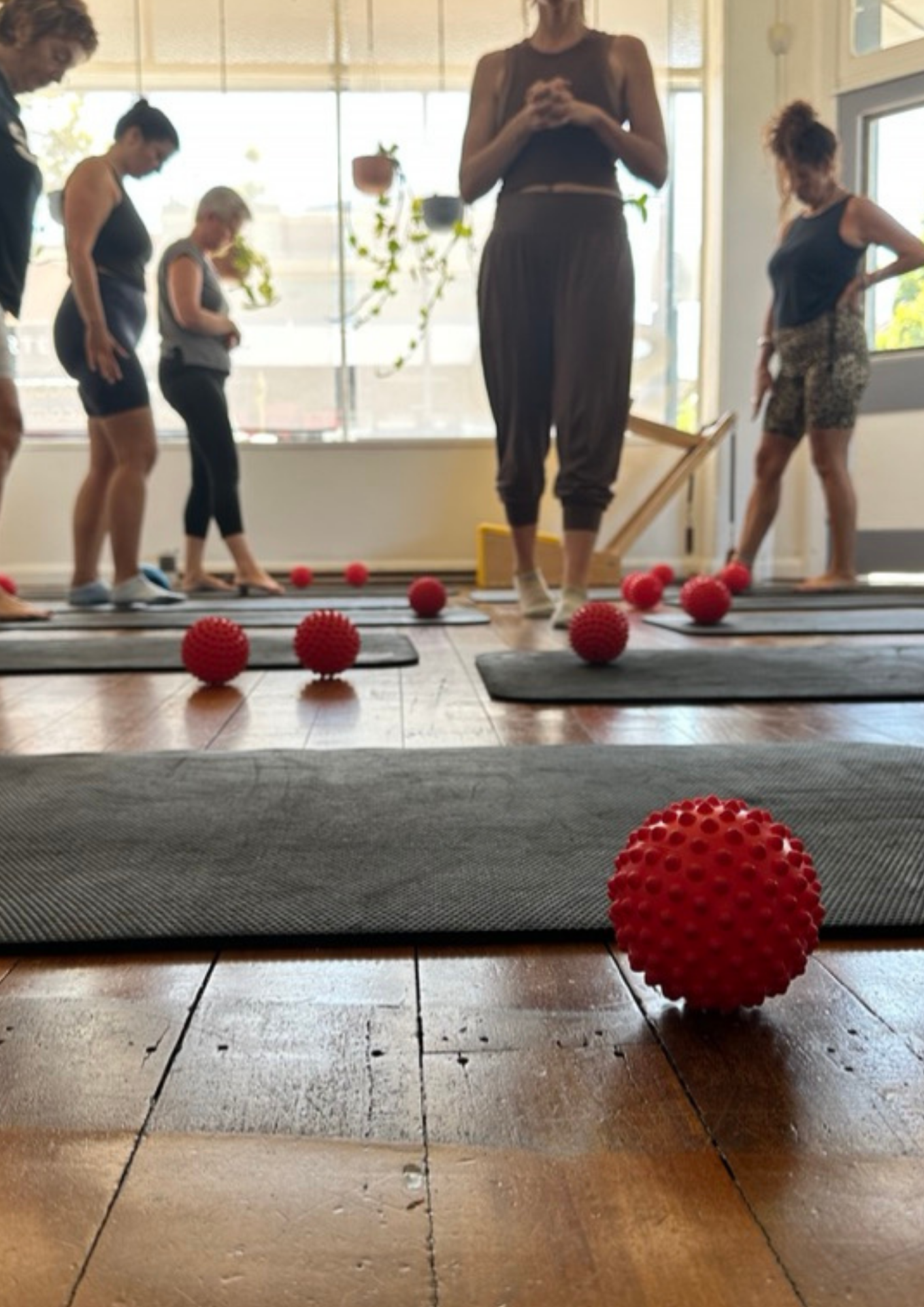
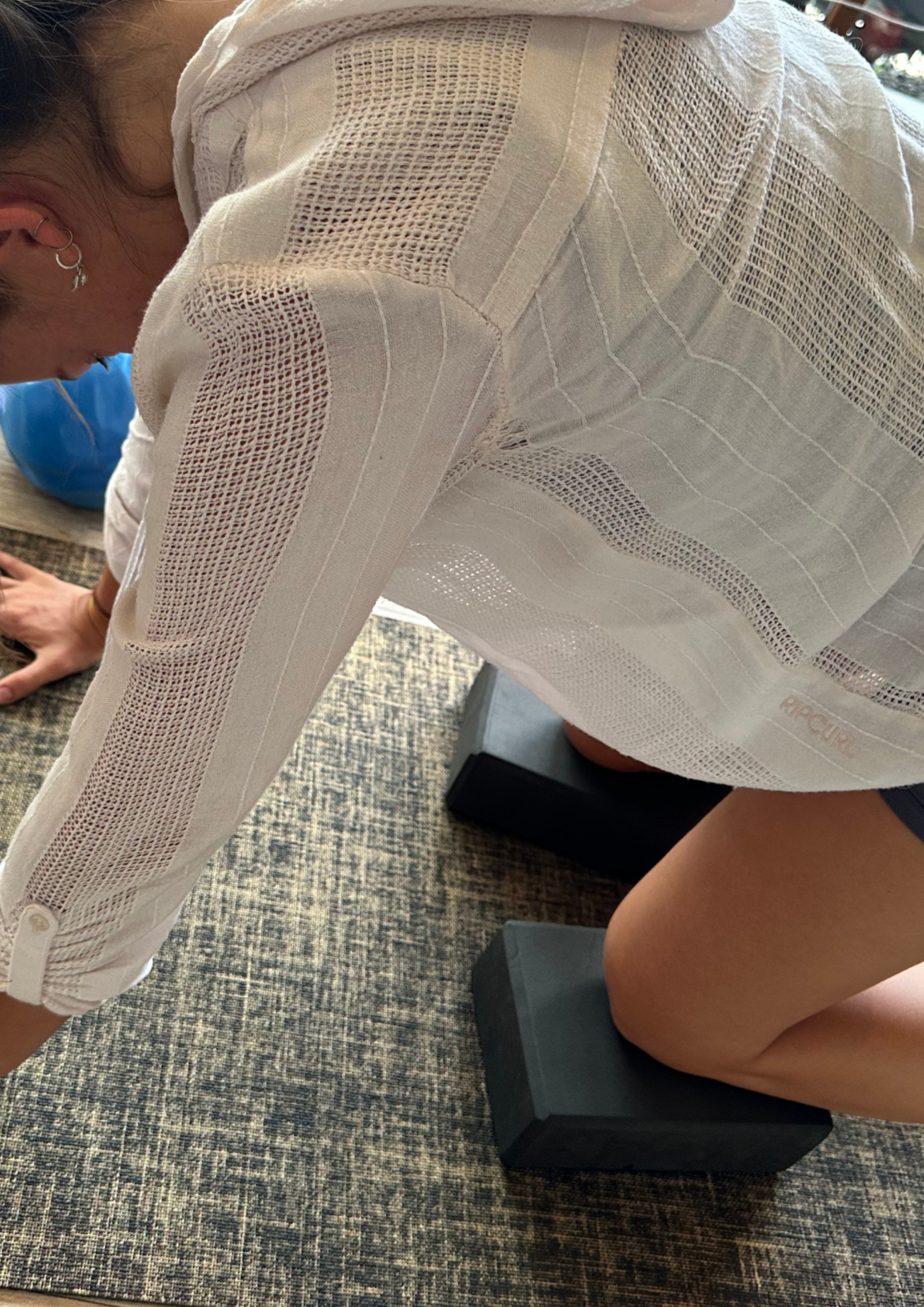
Fascia response tools and technique: chi ball, fascia ball, tennis ball, yoga block, bolster
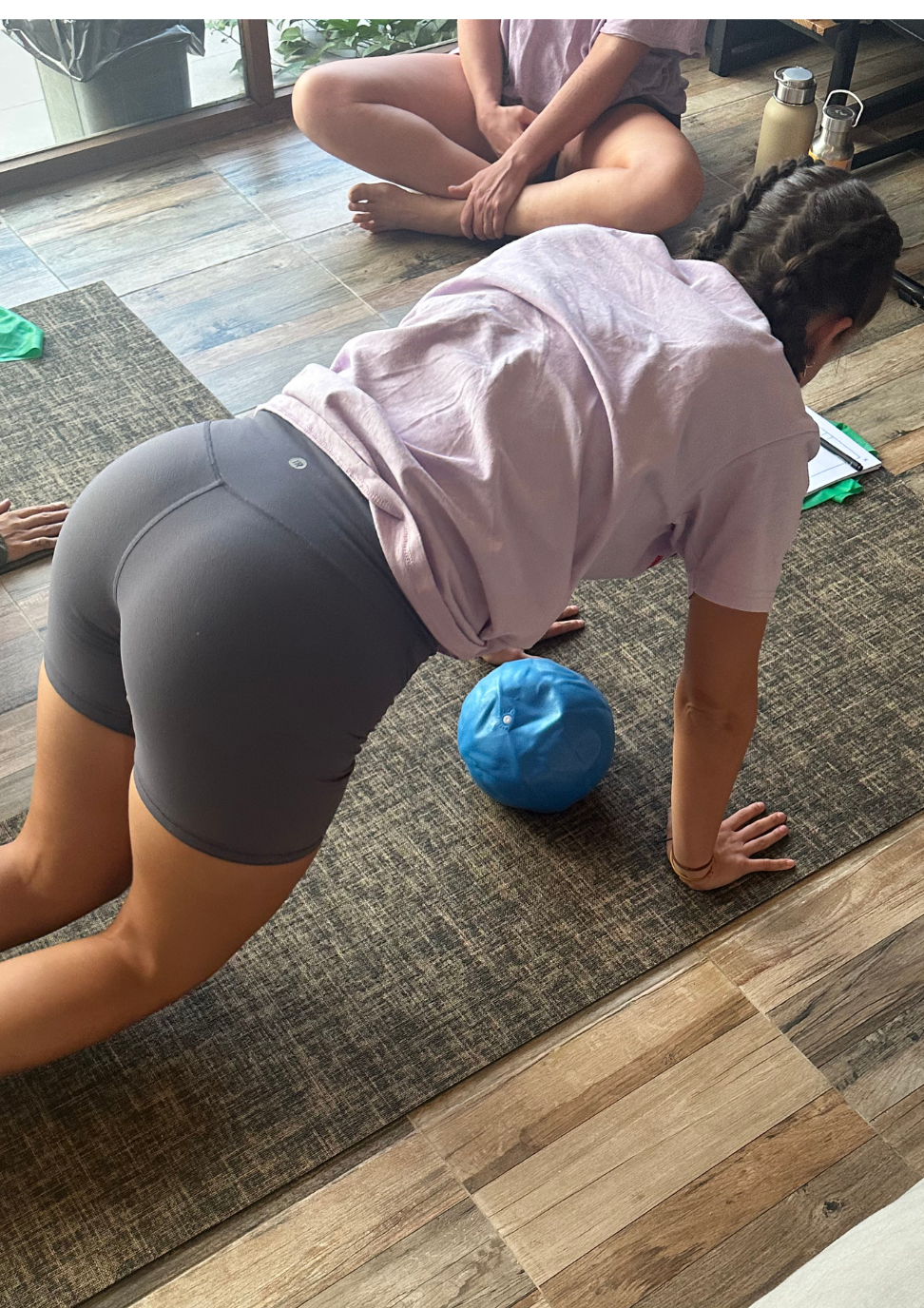
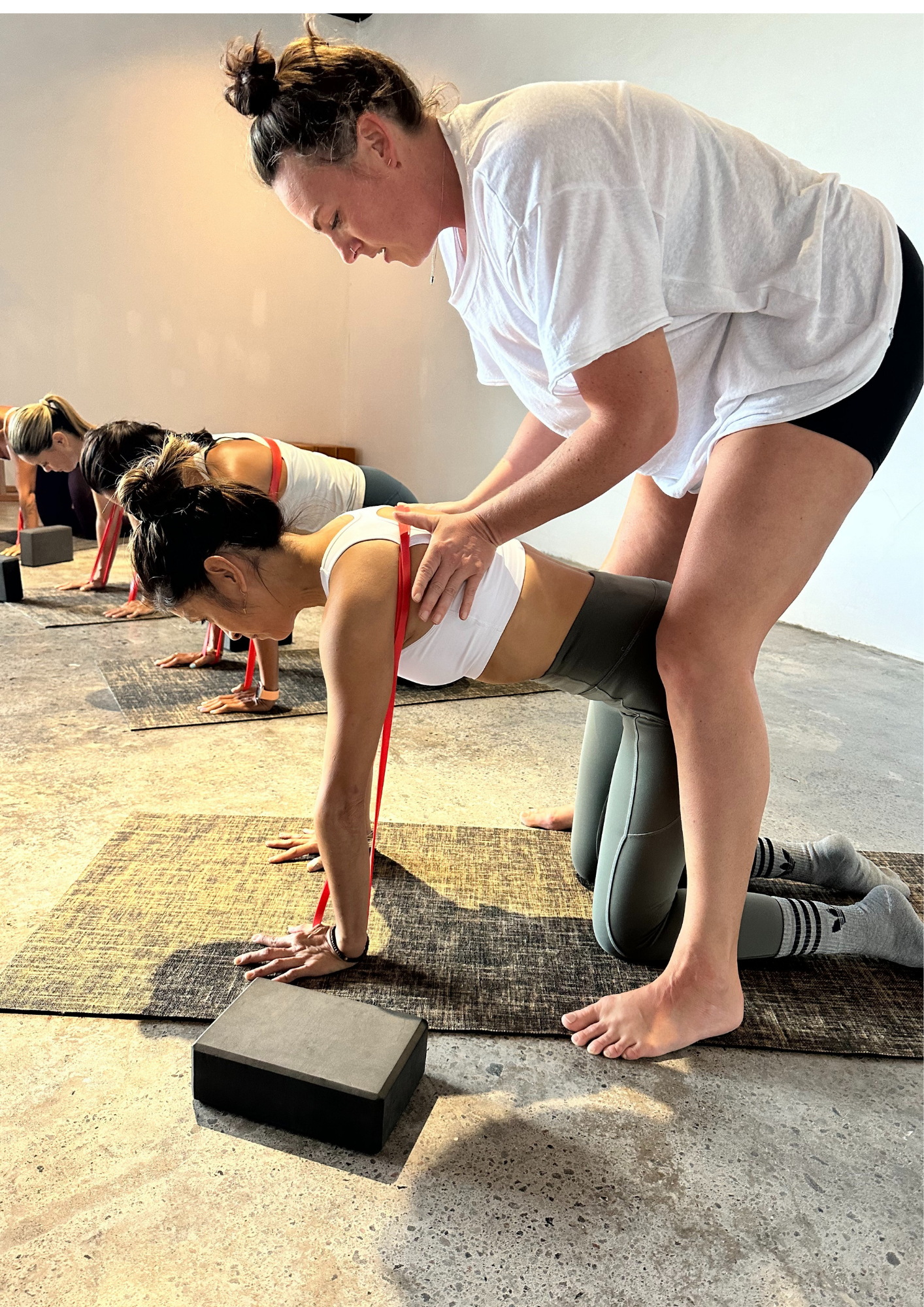
The Breathe, Contract, Move, Roll sequence Supportive hands-on feedback during fascia response work
Grounding and Grounding Challenges: the body's relationship to gravity as an integration tool
Day Two: Building Capacity and Putting It All Together
Day two builds on what day one prepared. Teachers move through the full suite of mobility tools and finish by designing their own session using the 5-Phase Framework, which they take home as their primary programming tool.
Day two covers:
Mobility self-assessment: reading the four systems that affect movement
CARs (Controlled Articular Rotations): full joint-by-joint sequence with teaching cues
PAILs and RAILs: building strength and control in lengthened positions
Isometrics and end range strength
Grounding Challenges as post-mobility integration
Stretch and restore
Programming: designing a standalone fascia and mobility class and integrating these tools into existing Pilates sessions (matwork and apparatus)
Session writing: each teacher designs and shares their own session before leaving
The 5-Phase Framework
Every session in this training follows the same five-phase structure that teachers take home and apply immediately.
Release: shift the nervous system into a parasympathetic state and prepare the connective tissue for change
Ground: close the circuit, connect the body to the ground, and integrate through functional movement
Mobilise: access and expand range using CARs, PAILs and RAILs, and isometric techniques
Strengthen: build capacity through newly acquired ranges
Stretch: restore calm and length, and close the session This framework works for a dedicated fascia and mobility class and can also be woven into an existing Pilates session. Teachers leave knowing how to do both
How This Applies to Group Classes
This training is designed to be taken directly into studio teaching. Teachers do not need to restructure their classes to begin using what they learn. Single elements can be introduced immediately:
A fascia response sequence to open a reformer class
CARs as a warm-up before matwork
A PAILs hold within an existing stretch
Grounding Challenges as an integration block following strengthen work
A 5-Phase Framework session offered as a specialty class or workshop within the studio program
For studios offering semi-private or small group sessions, the framework is particularly well suited to individual programming, as each phase accommodates a range of bodies and starting points without requiring a separate program for each participant.
Who Is This Training For?
This training is open to qualified Pilates teachers holding a minimum Matwork Certification in matwork. No prior knowledge of fascial anatomy or mobility methodology is required.
It is particularly relevant for teachers working with:
Clients with chronic tension, restricted mobility, or chronic pain
Hypermobile clients or those with complex presentations
Athletes or active clients wanting to build usable range
Clients experiencing stress, burnout, or nervous system dysregulation
General populations who want to move better and feel better in their bodies
Investment
Early bird: $950 per participant
Full price: $1,190 per participant
[EARLY BIRD CONDITIONS: deadline date and number of spots to be confirmed]
Training Details
The training is approved by the Pilates Association Australia (PAA) and attracts 12 Professional Development Points (PDPs). This counts toward members' annual PDP requirement.
Format: in-person, two full days
Contact hours: 6 hours net per day, 12 hours total
Daily schedule (example): 9:00am to 3:30pm with a 30-minute break
Maximum participants: 20
Props: Fascia balls provided
About Slo Method
Slo Method Pilates Teacher Training delivers classical Pilates teacher training nationally and internationally, with a specialisation in complex presentations including hypermobility, chronic pain, nervous system dysregulation, and perimenopause.
Fascia, Mobility and Movement is drawn from the Slo Method PTT curriculum and is taught by Jessica Davey, founder and director of Go Slo Studio in Fremantle WA and Slo Method Pilates Teacher Training.
Enquiries and Registration